Filters
Question type

Study Flashcards

Table 3-29 Juanita and Shantala run a business that programs and tests cellular phones. Assume that Juanita and Shantala can switch between programming and testing cellular phones at a constant rate. The following table applies. Table 3-29 Juanita and Shantala run a business that programs and tests cellular phones. Assume that Juanita and Shantala can switch between programming and testing cellular phones at a constant rate. The following table applies.    -Refer to Table 3-29. Juanita's opportunity cost of programming one cellular phone is testing A)  7.5 cellular phones and Shantala's opportunity cost of programming one cellular phone is testing 5/2 cellular phones. B)  2/15 cellular phones and Shantala's opportunity cost of programming one cellular phone is testing 5/2 cellular phones. C)  7.5 cellular phones and Shantala's opportunity cost of programming one cellular phone is testing 2/5 cellular phones. D)  2/15 cellular phones and Shantala's opportunity cost of programming one cellular phone is testing 2/5 cellular phones. -Refer to Table 3-29. Juanita's opportunity cost of programming one cellular phone is testing


A) 7.5 cellular phones and Shantala's opportunity cost of programming one cellular phone is testing 5/2 cellular phones.
B) 2/15 cellular phones and Shantala's opportunity cost of programming one cellular phone is testing 5/2 cellular phones.
C) 7.5 cellular phones and Shantala's opportunity cost of programming one cellular phone is testing 2/5 cellular phones.
D) 2/15 cellular phones and Shantala's opportunity cost of programming one cellular phone is testing 2/5 cellular phones.

E) A) and B)
F) C) and D)

Correct Answer

verifed

verified

Suppose a gardener produces both tomatoes and squash in his garden. If the opportunity cost of one bushel of squash is 2/5 bushel of tomatoes, then the opportunity cost of 1 bushel of tomatoes is


A) 2/5 bushel of squash.
B) 5/2 bushels of squash.
C) 2 bushels of squash.
D) 5 bushels of squash.

E) A) and B)
F) B) and D)

Correct Answer

verifed

verified

Table 3-27 Assume that Huang and Min can switch between producing parasols and producing porcelain plates at a constant rate. Table 3-27 Assume that Huang and Min can switch between producing parasols and producing porcelain plates at a constant rate.    -Refer to Table 3-27. The opportunity cost of 1 parasol for Min is A)  1/3 plate. B)  1/2 plate. C)  2 plates. D)  3 plates. -Refer to Table 3-27. The opportunity cost of 1 parasol for Min is


A) 1/3 plate.
B) 1/2 plate.
C) 2 plates.
D) 3 plates.

E) A) and D)
F) A) and C)

Correct Answer

verifed

verified

Figure 3-4 Lisa's Production Possibilities Frontier Bryce's Production Possibilities Frontier Figure 3-4 Lisa's Production Possibilities Frontier Bryce's Production Possibilities Frontier    -Refer to Figure 3-4. If the production possibilities frontiers shown are each for one year of working, then which of the following combinations of jackets and sweaters could Lisa and Bryce together produce in a given year? A)  1 sweater and 22 jackets B)  2 sweaters and 20 jackets C)  4 sweaters and 12 jackets D)  5 sweaters and 7 jackets -Refer to Figure 3-4. If the production possibilities frontiers shown are each for one year of working, then which of the following combinations of jackets and sweaters could Lisa and Bryce together produce in a given year?


A) 1 sweater and 22 jackets
B) 2 sweaters and 20 jackets
C) 4 sweaters and 12 jackets
D) 5 sweaters and 7 jackets

E) A) and D)
F) None of the above

Correct Answer

verifed

verified

Table 3-20 Assume that Brad and Theresa can switch between producing wheat and producing beef at a constant rate. Table 3-20 Assume that Brad and Theresa can switch between producing wheat and producing beef at a constant rate.    -Refer to Table 3-20. What is Brad's opportunity cost of producing one bushel of wheat? A)  5/6 pound of beef B)  6/5 pounds of beef C)  3/5 pounds of beef D)  5/3 pounds of beef -Refer to Table 3-20. What is Brad's opportunity cost of producing one bushel of wheat?


A) 5/6 pound of beef
B) 6/5 pounds of beef
C) 3/5 pounds of beef
D) 5/3 pounds of beef

E) A) and D)
F) A) and B)

Correct Answer

verifed

verified

Figure 3-21 Uzbekistan's Production Possibilities Frontier Azerbaijan's Production Possibilities Frontier Figure 3-21 Uzbekistan's Production Possibilities Frontier Azerbaijan's Production Possibilities Frontier   -Refer to Figure 3-21. Suppose Azerbaijan is willing to trade 3 nails to Uzbekistan for every bolt that Uzbekistan makes and sends to Azerbaijan. Which of the following combinations of bolts and nails could Azerbaijan then consume, assuming Uzbekistan specializes in making bolts and Azerbaijan specializes in making nails? A)  8 bolts and 56 nails B)  14 bolts and 44 nails C)  18 bolts and 32 nails D)  20 bolts and 26 nails -Refer to Figure 3-21. Suppose Azerbaijan is willing to trade 3 nails to Uzbekistan for every bolt that Uzbekistan makes and sends to Azerbaijan. Which of the following combinations of bolts and nails could Azerbaijan then consume, assuming Uzbekistan specializes in making bolts and Azerbaijan specializes in making nails?


A) 8 bolts and 56 nails
B) 14 bolts and 44 nails
C) 18 bolts and 32 nails
D) 20 bolts and 26 nails

E) All of the above
F) None of the above

Correct Answer

verifed

verified

With eight hours of work Elmer can produce 20 pounds of carrots or 15 pounds of peas. With eight hours Bugs can produce 10 pounds of carrots or 7.5 pounds of peas. Can Elmer and Bugs gain from trade? Defend your answer.

Correct Answer

verifed

verified

No, their opportunit...

View Answer

Henry can make a bird house in 3 hours and he can make a bird feeder in 1 hour. The opportunity cost to Henry of making a bird house is 1/3 bird feeder.

A) True
B) False

Correct Answer

verifed

verified

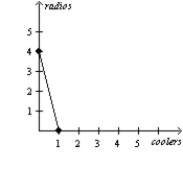
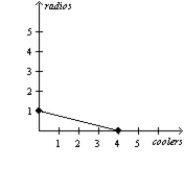
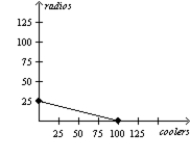
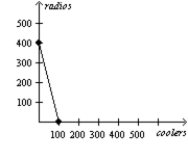
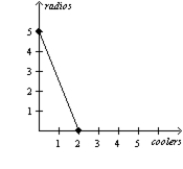
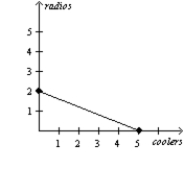
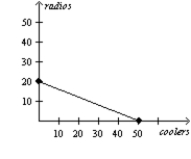
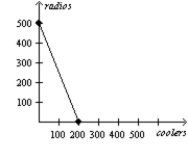
Table 3-5 Assume that Aruba and Iceland can switch between producing coolers and producing radios at a constant rate. Table 3-5 Assume that Aruba and Iceland can switch between producing coolers and producing radios at a constant rate.    -Refer to Table 3-5. Which of the following represents Iceland's production possibilities frontier when 100 labor hours are available? A)    B)    C)    D)   -Refer to Table 3-5. Which of the following represents Iceland's production possibilities frontier when 100 labor hours are available?


A)
Table 3-5 Assume that Aruba and Iceland can switch between producing coolers and producing radios at a constant rate.    -Refer to Table 3-5. Which of the following represents Iceland's production possibilities frontier when 100 labor hours are available? A)    B)    C)    D)
B)
Table 3-5 Assume that Aruba and Iceland can switch between producing coolers and producing radios at a constant rate.    -Refer to Table 3-5. Which of the following represents Iceland's production possibilities frontier when 100 labor hours are available? A)    B)    C)    D)
C)
Table 3-5 Assume that Aruba and Iceland can switch between producing coolers and producing radios at a constant rate.    -Refer to Table 3-5. Which of the following represents Iceland's production possibilities frontier when 100 labor hours are available? A)    B)    C)    D)
D)
Table 3-5 Assume that Aruba and Iceland can switch between producing coolers and producing radios at a constant rate.    -Refer to Table 3-5. Which of the following represents Iceland's production possibilities frontier when 100 labor hours are available? A)    B)    C)    D)

E) B) and C)
F) A) and B)

Correct Answer

verifed

verified

Scenario 3-2 In country A a worker who works 40 hours can produce 200 pounds of rice or 100 pounds of broccoli. In country B a worker who works 40 hours can produce 160 pounds of rice or 120 pounds of broccoli. -Refer to Scenario 3-2. Which country, if either, has a comparative advantage producing broccoli? Defend your answer using the numbers given.

Correct Answer

verifed

verified

Country B has a comparative ad...

View Answer

Table 3-8 Assume that England and Spain can switch between producing cheese and producing bread at a constant rate. Table 3-8 Assume that England and Spain can switch between producing cheese and producing bread at a constant rate.    -Refer to Table 3-8. Assume that England and Spain each has 24 labor hours available. If each country divides its time equally between the production of cheese and bread, then total production is A)  10 units of cheese and 6 units of bread. B)  25 units of cheese and 7.5 units of bread. C)  20 units of cheese and 12 units of bread. D)  12 units of cheese and 8 units of bread. -Refer to Table 3-8. Assume that England and Spain each has 24 labor hours available. If each country divides its time equally between the production of cheese and bread, then total production is


A) 10 units of cheese and 6 units of bread.
B) 25 units of cheese and 7.5 units of bread.
C) 20 units of cheese and 12 units of bread.
D) 12 units of cheese and 8 units of bread.

E) A) and C)
F) A) and B)

Correct Answer

verifed

verified

Table 3-6 Assume that Zimbabwe and Portugal can switch between producing toothbrushes and producing hairbrushes at a constant rate. Table 3-6 Assume that Zimbabwe and Portugal can switch between producing toothbrushes and producing hairbrushes at a constant rate.    -Refer to Table 3-6. Which of the following represents Zimbabwe's and Portugal's production possibilities frontiers when each country has 60 minutes of machine time available? A)  Zimbabwe Portugal B)  Zimbabwe Portugal..   C)  Zimbabwe Portugal   D)  Zimbabwe Portugal. -Refer to Table 3-6. Which of the following represents Zimbabwe's and Portugal's production possibilities frontiers when each country has 60 minutes of machine time available?
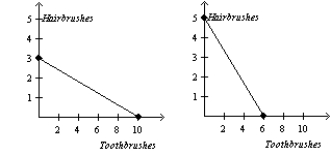
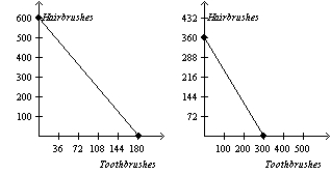

A) Zimbabwe Portugal
B) Zimbabwe Portugal..
Table 3-6 Assume that Zimbabwe and Portugal can switch between producing toothbrushes and producing hairbrushes at a constant rate.    -Refer to Table 3-6. Which of the following represents Zimbabwe's and Portugal's production possibilities frontiers when each country has 60 minutes of machine time available? A)  Zimbabwe Portugal B)  Zimbabwe Portugal..   C)  Zimbabwe Portugal   D)  Zimbabwe Portugal.
C) Zimbabwe Portugal
Table 3-6 Assume that Zimbabwe and Portugal can switch between producing toothbrushes and producing hairbrushes at a constant rate.    -Refer to Table 3-6. Which of the following represents Zimbabwe's and Portugal's production possibilities frontiers when each country has 60 minutes of machine time available? A)  Zimbabwe Portugal B)  Zimbabwe Portugal..   C)  Zimbabwe Portugal   D)  Zimbabwe Portugal.
D) Zimbabwe Portugal.

E) A) and B)
F) B) and C)

Correct Answer

verifed

verified

Table 3-36 Table 3-36    -Refer to Table 3-36. Antigua has an absolute advantage in the production of A)  towels and Barbuda has an absolute advantage in the production of umbrellas. B)  umbrellas and Barbuda has an absolute advantage in the production of towels. C)  both goods and Barbuda has an absolute advantage in the production of neither good. D)  neither good and Barbuda has an absolute advantage in the production of both goods. -Refer to Table 3-36. Antigua has an absolute advantage in the production of


A) towels and Barbuda has an absolute advantage in the production of umbrellas.
B) umbrellas and Barbuda has an absolute advantage in the production of towels.
C) both goods and Barbuda has an absolute advantage in the production of neither good.
D) neither good and Barbuda has an absolute advantage in the production of both goods.

E) B) and C)
F) B) and D)

Correct Answer

verifed

verified

Table 3-21 Assume that Jamaica and Norway can switch between producing coolers and producing radios at a constant rate. The following table shows the number of coolers or number of radios each country can produce in one day. Table 3-21 Assume that Jamaica and Norway can switch between producing coolers and producing radios at a constant rate. The following table shows the number of coolers or number of radios each country can produce in one day.    -Refer to Table 3-21. At which of the following prices would both Jamaica and Norway gain from trade with each other? A)  1 radio for 1 cooler B)  1 radio for 4 coolers C)  1 radio for 10 coolers D)  Jamaica and Norway would both gain from trade at all of the above prices. -Refer to Table 3-21. At which of the following prices would both Jamaica and Norway gain from trade with each other?


A) 1 radio for 1 cooler
B) 1 radio for 4 coolers
C) 1 radio for 10 coolers
D) Jamaica and Norway would both gain from trade at all of the above prices.

E) B) and C)
F) A) and B)

Correct Answer

verifed

verified

Figure 3-21 Uzbekistan's Production Possibilities Frontier Azerbaijan's Production Possibilities Frontier Figure 3-21 Uzbekistan's Production Possibilities Frontier Azerbaijan's Production Possibilities Frontier   -Refer to Figure 3-21. Azerbaijan's opportunity cost of one bolt is A)  1/4 nail and Uzbekistan's opportunity cost of one bolt is 1/2 nail. B)  1/4 nail and Uzbekistan's opportunity cost of one bolt is 2 nails. C)  4 nails and Uzbekistan's opportunity cost of one bolt is 1/2 nail. D)  4 nails and Uzbekistan's opportunity cost of one bolt is 2 nails. -Refer to Figure 3-21. Azerbaijan's opportunity cost of one bolt is


A) 1/4 nail and Uzbekistan's opportunity cost of one bolt is 1/2 nail.
B) 1/4 nail and Uzbekistan's opportunity cost of one bolt is 2 nails.
C) 4 nails and Uzbekistan's opportunity cost of one bolt is 1/2 nail.
D) 4 nails and Uzbekistan's opportunity cost of one bolt is 2 nails.

E) A) and B)
F) A) and C)

Correct Answer

verifed

verified

Table 3-15 Table 3-15    -Refer to Table 3-15. Assume that the farmer and the rancher each has 40 labor hours available. If each person divides his time equally between the production of meat and potatoes, then total production is A)  5 pounds of meat and 4 pounds of potatoes. B)  6 pounds of meat and 7.5 pounds of potatoes. C)  7.5 pounds of meat and 6 pounds of potatoes. D)  10 pounds of meat and 8 pounds of potatoes. -Refer to Table 3-15. Assume that the farmer and the rancher each has 40 labor hours available. If each person divides his time equally between the production of meat and potatoes, then total production is


A) 5 pounds of meat and 4 pounds of potatoes.
B) 6 pounds of meat and 7.5 pounds of potatoes.
C) 7.5 pounds of meat and 6 pounds of potatoes.
D) 10 pounds of meat and 8 pounds of potatoes.

E) All of the above
F) A) and C)

Correct Answer

verifed

verified

Table 3-5 Assume that Aruba and Iceland can switch between producing coolers and producing radios at a constant rate. Table 3-5 Assume that Aruba and Iceland can switch between producing coolers and producing radios at a constant rate.    -Refer to Table 3-5. Which of the following represents Aruba's production possibilities frontier when 100 labor hours are available? A)    B)    C)    D)   -Refer to Table 3-5. Which of the following represents Aruba's production possibilities frontier when 100 labor hours are available?


A)
Table 3-5 Assume that Aruba and Iceland can switch between producing coolers and producing radios at a constant rate.    -Refer to Table 3-5. Which of the following represents Aruba's production possibilities frontier when 100 labor hours are available? A)    B)    C)    D)
B)
Table 3-5 Assume that Aruba and Iceland can switch between producing coolers and producing radios at a constant rate.    -Refer to Table 3-5. Which of the following represents Aruba's production possibilities frontier when 100 labor hours are available? A)    B)    C)    D)
C)
Table 3-5 Assume that Aruba and Iceland can switch between producing coolers and producing radios at a constant rate.    -Refer to Table 3-5. Which of the following represents Aruba's production possibilities frontier when 100 labor hours are available? A)    B)    C)    D)
D)
Table 3-5 Assume that Aruba and Iceland can switch between producing coolers and producing radios at a constant rate.    -Refer to Table 3-5. Which of the following represents Aruba's production possibilities frontier when 100 labor hours are available? A)    B)    C)    D)

E) C) and D)
F) None of the above

Correct Answer

verifed

verified

Ken and Traci are two woodworkers who both make tables and chairs. In one month, Ken can make 3 tables or 18 chairs, whereas Traci can make 8 tables or 24 chairs. Given this, we know that the opportunity cost of 1 table is


A) 1/6 chair for Ken and 1/3 chair for Traci.
B) 1/6 chair for Ken and 3 chairs for Traci.
C) 6 chairs for Ken and 1/3 chair for Traci.
D) 6 chairs for Ken and 3 chairs for Traci.

E) A) and D)
F) C) and D)

Correct Answer

verifed

verified

Table 3-36 Table 3-36    -Refer to Table 3-36. What is Antigua's opportunity cost of one umbrella? A)  3/5 towels B)  2/3 towels C)  3/2 towels D)  5/3 towels -Refer to Table 3-36. What is Antigua's opportunity cost of one umbrella?


A) 3/5 towels
B) 2/3 towels
C) 3/2 towels
D) 5/3 towels

E) B) and C)
F) None of the above

Correct Answer

verifed

verified

Table 3-6 Assume that Zimbabwe and Portugal can switch between producing toothbrushes and producing hairbrushes at a constant rate. Table 3-6 Assume that Zimbabwe and Portugal can switch between producing toothbrushes and producing hairbrushes at a constant rate.    -Refer to Table 3-6. Which of the following combinations of toothbrushes and hairbrushes could Portugal produce in 30 minutes? A)  1 toothbrush and 4 hairbrushes B)  4 toothbrushes and 2 hairbrushes C)  5 toothbrushes and 6 hairbrushes D)  6 toothbrushes and 5 hairbrushes -Refer to Table 3-6. Which of the following combinations of toothbrushes and hairbrushes could Portugal produce in 30 minutes?


A) 1 toothbrush and 4 hairbrushes
B) 4 toothbrushes and 2 hairbrushes
C) 5 toothbrushes and 6 hairbrushes
D) 6 toothbrushes and 5 hairbrushes

E) A) and C)
F) A) and B)

Correct Answer

verifed

verified

Showing 21 - 40 of 527

Related Exams

Show Answer